Chewing Pests Team News
-
IRAC Holds its 60th International Meeting in Cambridge, UK
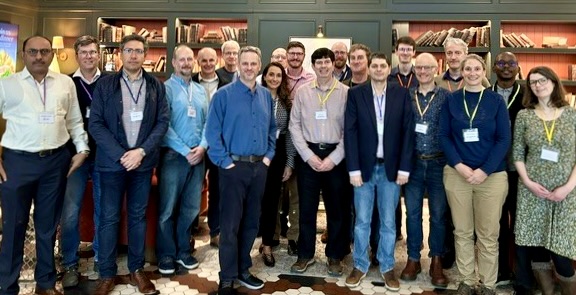
The Insecticide Resistance Action Committee (IRAC) International held its 60th Meeting from April 14–17, 2026, in Cambridge, United Kingdom. Representatives from member companies, regional groups, and Working Groups came together to review progress, discuss emerging resistance management challenges, and define strategic priorities for the years ahead.
The meeting opened with a strategic session focused on IRAC’s vision beyond 2026 and the future development of a global resistance database. Participants reviewed recent achievements, explored approaches to improving resistance monitoring and information sharing, and discussed how resistance data can be made more accessible and valuable to stakeholders worldwide. The programme also featured expert perspectives on the application of molecular biology and emerging technologies to support insect resistance management.
A key focus of the second day was a workshop examining the role of low-dose insecticides and their implications for insect resistance management (IRM). Discussions explored regulatory and technical considerations, the relationship between dose and resistance selection, and the opportunities and risks associated with low-dose approaches and emerging insect control traits. The workshop provided an opportunity for participants to exchange perspectives and consider future IRAC guidance in this area.
The third day addressed resistance management communication and stakeholder engagement. Topics included insecticide resistance labeling initiatives, resistance risk assessment approaches, updates from IRAC Working Groups and regional committees, and discussions on strengthening collaboration between IRAC and public-sector partners involved in resistance management.
The meeting concluded with an Executive Committee session focused on IRAC’s organisational priorities, resource allocation, and future strategic direction. Discussions included opportunities for enhanced collaboration across Resistance Action Committees (RACs), digital resource development, resistance database initiatives, and the continued delivery of practical tools and guidance to support sustainable insecticide use worldwide.
Presentations, meeting notes, and supporting materials are available to IRAC members when logged into the website.
-
IRAC Guidance: Factors involved with lower-than-expected insecticide field performance are often not related to insecticide resistance.
Unexpected crop damage by a pest after a foliar application of an insecticide has been made is often firstly assumed to be because of pest resistance, but commonly there are many other factors why insecticide applications can fail to meet expectations. Before associating insecticide resistance as the reason for crop failure, commonly made mistakes regarding application decisions and practices should be excluded. Many of the reasons for control failures can be avoided by reading product labels carefully and by following label instructions fully. This guideline outlines some of the key factors and considerations for foliar applications of insecticides.
-
New versions (11.1, January 2024) of the IRAC MoA classification and associated resources have just been released and posted on the website.
The Changes include the following updates:
Group 4E Nicotinic acetylcholine receptor (nAChR) competitive modulators – New Active: Fenmezoditiaz
Group 23: Inhibitors of acetyl-CoA carboxylase – New Active: Spidoxamat.
Group 35 RNA Interference mediated target suppressors New Group and Active: Ledprona
Group UNF Fungal agents of unknown or uncertain MoA New Fungal Agent added: Akanthomyces muscarius Ve6Resources:
-
Insecticide Mixtures and Resistance Management – Updated Guidance
The combined application of two insecticides with different modes of action (MoA) is an increasingly common approach to insect pest management. Insecticide mixtures (tank-mix or pre-formulated mixture) are applied to crops for pest management for many different reasons. These reasons include to broaden spectrum, to combine different technical characteristics of insecticides, or to combine two modes of action to control species where single compound applications do not provide sufficient control. Mixing insecticides, may also offer a benefit for insecticide resistance management (IRM). In the guidance document IRAC presents an up-dated mixture statement and the key considerations supporting it.
-
Cabbage stem flea beetle poster: Recommendations for Sustainable Production
In the Europe, flea beetle infestations are of particular concern due to the decreasing availability of insecticides. Increasing regulatory restrictions for product registrations are a key factor in the availability of effective insecticides. Of the remaining classes of chemistries available, selection pressure is high and resistance is present. The situation presents the need to adopt all available crop management practices to produce a crop with the least reliance on insecticides.
The cabbage stem flea beetle poster outlines insecticide resistance management strategies alongside integrated pest management recommendations.
-
A new Bt corn brochure: Integrating Bt corn for fall armyworm (FAW) management
The IRAC Plant Biotechnology Working Group has completed a short poster brochure discussing the use of Bt corn to manage fall armyworm, Spodoptera frugiperda, in the Asia-Pacific region. The brochure complements IRAC’s poster and brochure developed in 2021 entitled “Manage fall armyworm in 3 steps”. The 3 steps are 1) Incorporate agronomic actions, 2) Identify pest and decide when to treat, and 3) Control FAW using IRM principles. The main IRM principle relayed in this brochure is the rotation in modes of action across sequential pest generations. While this 3 step process is effective for most countries in the Asia-Pacific region where crop protection tools are readily available, Bt corn is an important tool that also may be used by farmers in much of the Americas as well as in an increasing number of countries where fall armyworm has recently invaded like South Africa, Philippines, Pakistan, and Vietnam.
The Bt corn brochure is entitled “Integrating Bt corn for fall armyworm (FAW) management”. Effective Bt hybrids against fall armyworm are available and we want to ensure that farmers follow insect resistance management guidelines to maximize long-term benefits of the technology. This brochure also discusses a simple 3 step process: 1) Plan, 2) Plant refuge & monitor, and 3) Evaluate & Treat. The purpose is to be proactive in building an Integrated Pest Management (IPM) plan to use multiple tools and tactics against FAW founded on the host-plant resistance provided by Bt traits. Our goal is for farmers to be able to understand what a non-Bt refuge is, why it is important, and how to incorporate it when they plant a Bt corn hybrid. We also advise farmers to scout their fields and determine the need to incorporate additional control tools, such as insecticidal sprays, if indeed economic population levels of FAW arise in their Bt and non-Bt corn fields.
The new brochure is posted here and was developed in conjunction with CropLife International and with feedback from many contributors. If you have questions regarding this educational brochure supported by IRAC, please contact Alan Porter at enquiries@irac-online.org.
-
IRAC Vietnam takes up the challenge to improve farmer IRM
For farmers in Vietnam, the agricultural environment is very dynamic. Changes in weather patterns, consumer behavior, the availability of labor, the availability of crop protection products, and the crop pest patterns, require farmers to adjust their agricultural practices to sustain and improve both crop quantity and quality. Badly adopted cultivation practices can lead to increasing problems with insecticide resistance.
Farmers in Vietnam (VN) are experiencing increasing insecticide resistance, rendering their efforts in crop protection inefficient even though they can choose between more than 1500 different insecticide brands, which represent over 600 different active ingredients. If the offer is so diversified, why are farmers running into trouble? The key question is, how to decide which product to use? Interviews with farmers reveal that most believe that they should rotate different products, for insecticide resistance management (IRM).
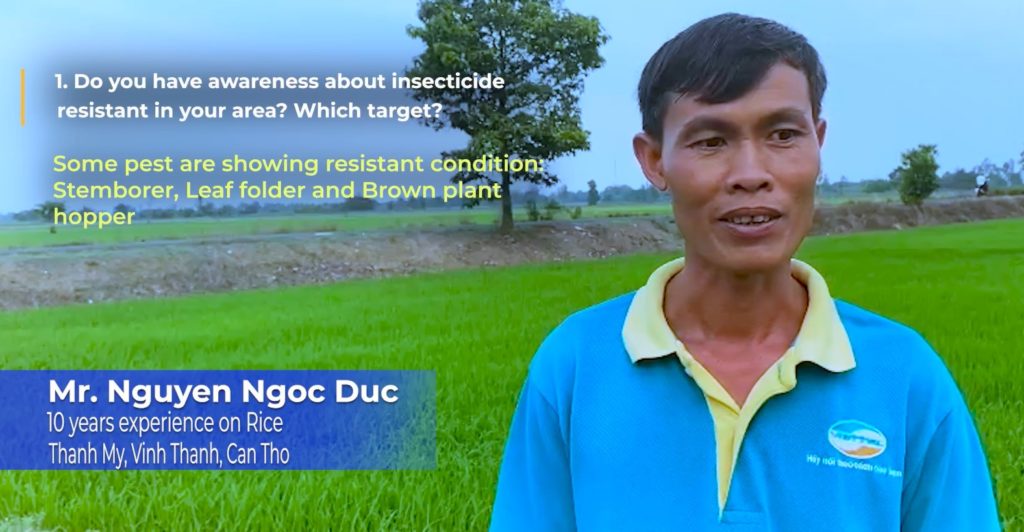
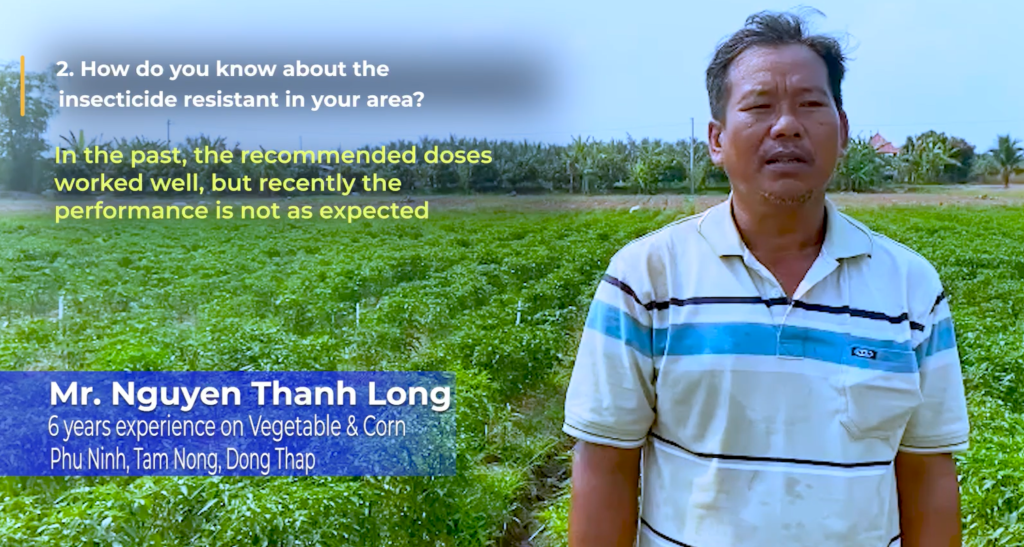
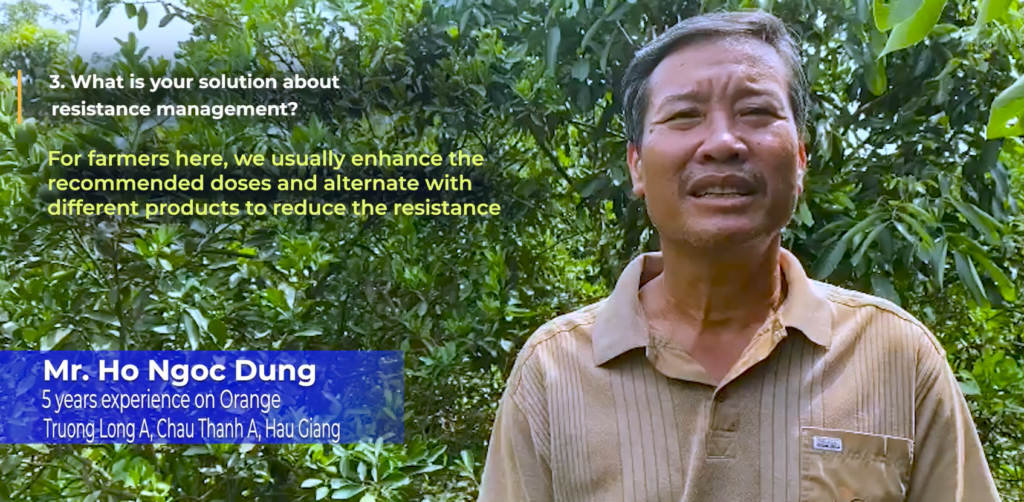
This shows that farmers are clearly lacking available, essential IRM guidance.
- For rotation, farmers need to know how to select best-fit products, among dozens of hundreds of available insecticides brands, to use.
- Product rotation should be associated with insect generations and the product’s mode of action (MoA) which is indicated by IRAC group numbers.
- The product MoA should be printed on product labels in a standardized manner, including essential information on IRM, as proposed by IRAC and CropLife International. So far, MoA labelling is still only optional for VN manufacturers.
IRAC VN, in association with CropLife VN, are engaging to help farmers to better manage insecticide resistance in the future and planning to:
- be fully committed to comply with IRAC guidance (MoA icon, IRM statement)
- encourage all VN pesticide manufacturers to implement MoA labelling practice
- engage the VN Government agency to make MoA labelling mandatory
- create online IPM, RM, RAC guidance resources in Vietnamese
- establish train-the-trainer programs together with CropLife VN, government agencies, and other stake holders to increase IRM awareness and practice
-
Updated guidelines for rotating seed treated, soil and foliar applied insecticides
The general principles of resistance management apply to seed and soil treatments as with foliar applied insecticides, however there are some additional factors that should be considered. There are limited insecticide modes of action available for use either as soil or seed treatments, therefore, the judicious use of the available modes of action is essential for sustainable control of the insect pests targeted by these applications. The updated IRAC guidelines provide more information.
-
New IRAC WG – Chewing Pests
The Chewing Pest WG is a new group for IRAC combining the past Lepidoptera and Coleoptera WGs and complements the Sucking Pest WG. These two key groups sit within the IRAC Crop Protection Team along with the Nematode WG. The team held their first conference call on August 24th 2021, agreed membership and drafted some initial objectives. Further information can be found on the Chewing Pest WG homepage
-
Further language versions of the IRM and MoA videos now available
A full list of the languages available are copied below.
Mode of Action:
English, Spanish, Portuguese, Mandarin Chinese, French, Italian, Korean, Arabic, Russian, Bahasa(Indonesian), Khmer , Japanese , Tagalog (Philippines), HindiInsecticide Resistance Management:
English, Spanish, Portuguese, Mandarin Chinese, Japanese, Hindi, French, Italian, Korean, Arabic, Russian, Bahasa (Indonesian), Russian, Tagalog (Philippines)